IPTV subscription UK: what you are actually buying
Most UK IPTV pages sell you a channel count. This one explains what an IPTV subscription actually gets you, where the money goes, and what to check before paying.
Check BingeBear on your own telly before paying.
Start a free 24-hour trial with no card. Check your channels, supported player and device, then read the current plans and activation terms.
If you are looking at an IPTV subscription in the UK, almost every page you land on will lead with a number. Thirty thousand channels. Forty thousand. Some claim more. That number is close to meaningless, and it is worth understanding what you are actually buying before you compare anything.
What an IPTV subscription actually is
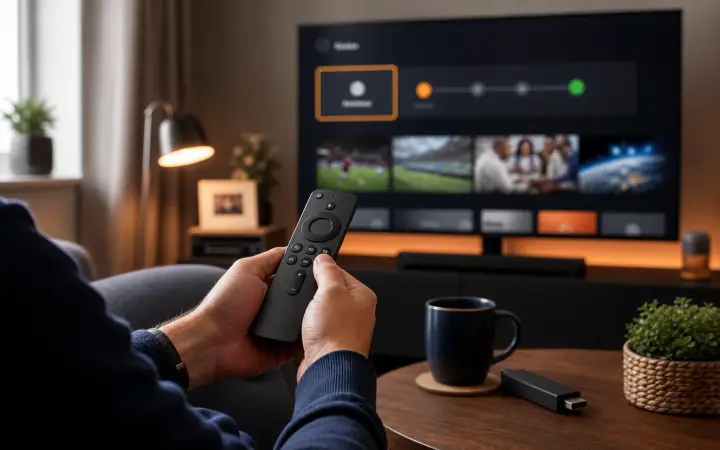
It is live television and on-demand content delivered over your broadband, instead of over a satellite dish or an aerial. Nothing is installed. There is no engineer visit, no hole drilled in a wall and no box to buy if you already own a smart TV, a Firestick, an Android box, a tablet or a phone.
That last point matters more than it sounds if you rent, live in a flat, or live somewhere a dish is not permitted. A conservation area or a leasehold with no external fixings makes satellite genuinely difficult, and that is a large part of why people look at IPTV in the first place rather than the price.
The channel count is the wrong thing to compare
A service carrying fifty thousand channels that is missing the two you watch is worse, for you, than one carrying a fraction of that which has both.
Most of any large channel count is international feeds you will never open. What decides whether a UK subscription is worth the money is narrower:
- Do the British terrestrial channels come through cleanly, meaning BBC One and BBC Two, ITV, Channel 4 and Channel 5, with the regional variant that carries your local news?
- Is the live sport you follow there, and does it hold up during a live match rather than on a quiet Tuesday?
- Is the division your club actually plays in covered? This is where most packages fall short.
The gap nobody advertises
Top-flight football is carried almost everywhere. It is the easy part.
What is frequently missing, and rarely mentioned on a sales page, is the EFL, rugby league, and county cricket. If you follow a Championship or League One side, watch Super League, or care about the county game, those are the channels to open first during any trial. A package built around Premier League weekends can look complete and still not show your team from one month to the next.
We would rather not hand you a list of channel names to take on trust. Availability changes over time and no service can promise a permanent line-up, ours included, which is exactly why we would rather you checked your own must-have channels during a free day.
Monthly versus one-off, and why it changes the arithmetic
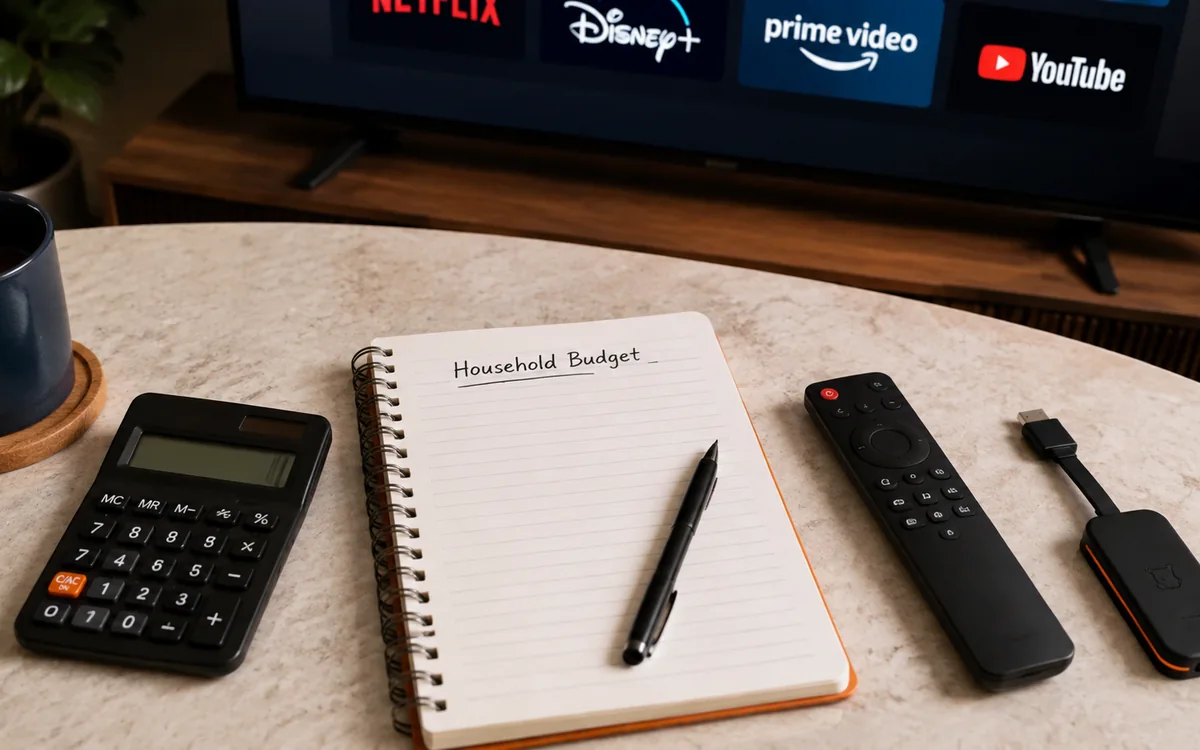
Nearly every UK IPTV subscription is billed monthly or annually. Somewhere between five and eight pounds a month is the going rate, which is genuinely inexpensive against a full satellite package.
The catch is that it never stops. A monthly plan renews whether you watched anything that month or not, it renews while you are on holiday, and it stops entirely the day the payment fails. Over three or four years the total is considerably larger than the monthly figure suggests, and you have nothing at the end of it.
We price differently, and it is the main thing that distinguishes us:
- Six months is £60 once and ten months £85 once, each on one device, plus a one-off £13 player activation.
- 24 months is £155 once and Lifetime £255 once, with six years of guaranteed service; player activation is included on both.
- For more screens, buy two subscriptions and get a third separate account free.
- All four plans carry a 90-day money-back guarantee.
Nothing renews, because there is no card on file to renew against. Whether that suits you depends on how long you expect to want it. For a household replacing a long-standing sports package, the sums usually make themselves. For someone who wants three months of football and then to stop, a monthly service is the more honest fit and we would say so.
Full detail is on the UK pricing page.
Five things worth checking before you pay anyone
- Your own must-have channels, by name. Write down four or five. Open each one. Everything else is secondary.
- A live event at a busy hour. Around nine on a weeknight, when the whole street is streaming. A service that looks flawless on a quiet afternoon has told you nothing.
- Your line under load. Roughly 10 Mbps carries HD and 25 Mbps carries 4K, but the number that matters is what you get with the rest of the house online.
- Whether a real person answers. Send an awkward question before you pay and see what comes back, and how quickly.
- What happens when you stop paying. With a monthly plan, access ends. With a one-off plan, it does not. Know which you are buying.
What we would not claim
We are not going to tell you IPTV is universally legal, or that we are licensed by anyone, because those are not our claims to make and the sites making them freely are not being straight with you. Use content you are authorised to access, and read the terms of any service before you sign up, ours included.
What we will say is that you should never pay for television you have not seen working in your own sitting room. That is the whole argument for a trial with no card attached.
If you want to test it
The free 24-hour trial takes a name and a WhatsApp number, no card and no account. A real person sets it up with you on whatever you already own, and you have a full day to check the channels you actually care about.
There is a city by city breakdown covering fifty UK towns and cities if you want the local picture, and a plain explanation of how the trial works if you would rather read the process first.
Frequently asked questions
What does an IPTV subscription in the UK normally include?
Live channels, an on-demand library of films and series, and an electronic programme guide, delivered over your existing broadband rather than a dish or aerial. What separates one service from another is which channels are carried and whether the stream holds up at peak time, not the headline channel count.
Is an IPTV subscription cheaper than Sky in the UK?
Usually, but the honest comparison depends on what you are replacing. If you only watch terrestrial channels, Freeview costs nothing and is the better answer. The saving is real for households currently paying for a sports tier they use a few months of the year.
What is the difference between a monthly and a one-off IPTV plan?
A monthly plan bills again whether you watched anything or not, and stops the day you stop paying. A one-off plan is a single payment with no renewal date. BingeBear uses one-off pricing: £60 for six months, £85 for ten months, £155 for 24 months or £255 for Lifetime, with six years of guaranteed service, each on one device.
Do I need a contract or a credit check?
Not with us. There is no contract, no minimum term, no credit check and no card taken for the free trial. You send a name and a WhatsApp number, get a login back, and watch for 24 hours before deciding anything.
Can I use an IPTV subscription on more than one telly?
Each account plays on one device at a time. For a second or third telly, buy two subscriptions and get a third separate account free. Bigger household setups are arranged on WhatsApp once the first device is working.